
What Is UDRB in Miami? A Developer’s Guide to Urban Development Review Board Approval
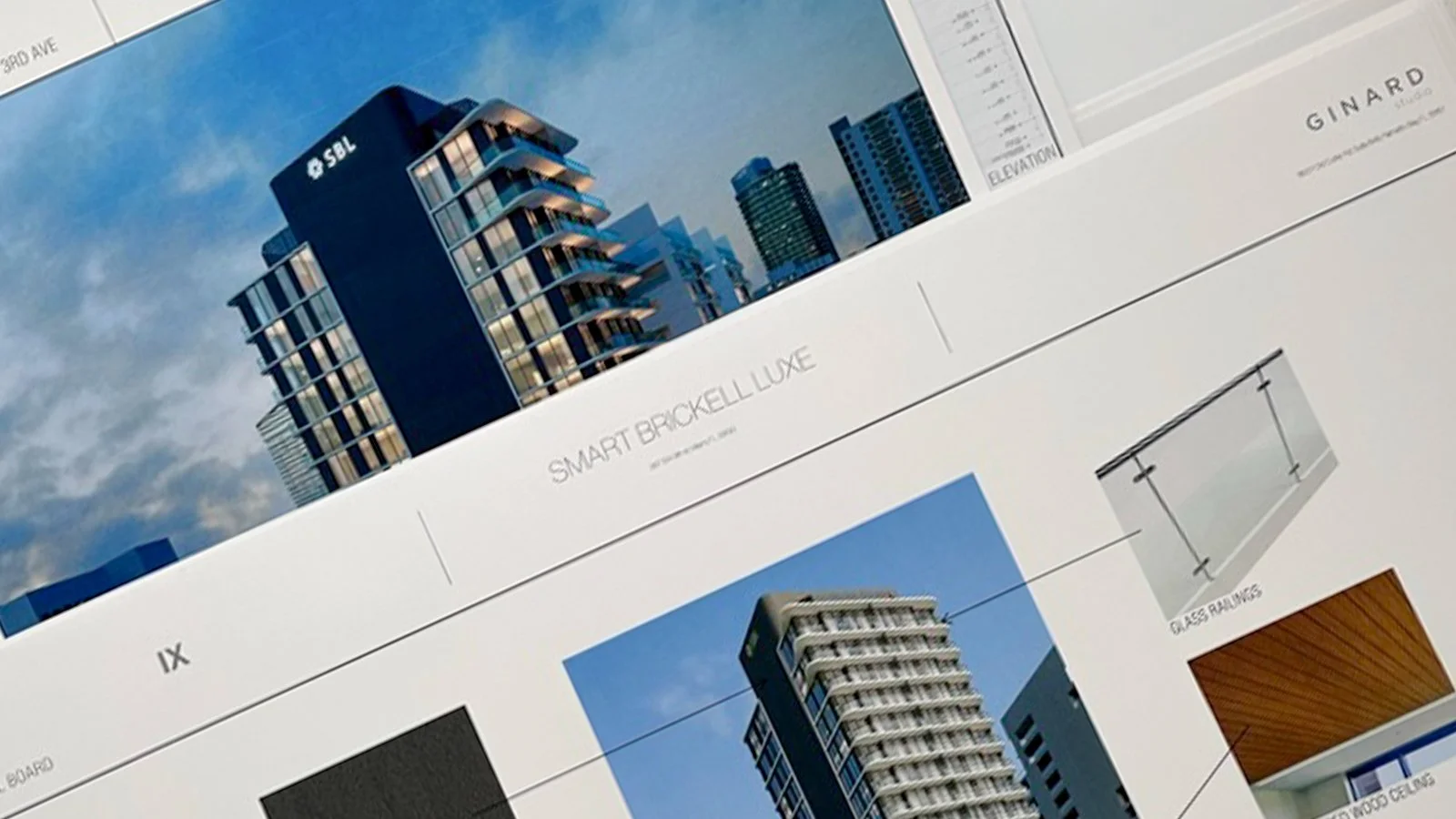
For developers planning a multifamily, hospitality, mixed-use, commercial, or other significant building project in Miami, understanding the Urban Development Review Board (UDRB) can be an important part of the development strategy.
UDRB review is more than an architectural presentation. It is part of Miami's urban development review process, where certain projects are evaluated in relation to their urban quality, compatibility, architecture, and contribution to the city's architectural and social fabric.
For a development team, understanding the UDRB process early can help align zoning, site planning, architecture, landscape, and presentation requirements before a project reaches the review stage.
What Is UDRB?
UDRB stands for Urban Development Review Board.
The City of Miami describes the purpose of the UDRB as reviewing and recommending to the Director of Planning and Zoning whether certain projects should be approved, approved with conditions, or denied based on their urban quality, compatibility, and contribution to the architectural and social fabric of the City.
In practical terms, UDRB provides an additional level of professional review for certain development projects.
The process looks beyond whether a project simply fits within a zoning envelope. It considers how a proposed development responds to its surrounding urban context and how the architecture, site planning, and overall design contribute to the city.
For developers, this distinction is important.
A project can begin with a strong development program and a viable site, but the architectural response still needs to communicate how the project belongs within its particular Miami context.
Which Projects Require UDRB Review in Miami?
The City's current UDRB information identifies several categories of projects that are required to be submitted for review.
These include:
Projects exceeding 200,000 square feet
Certain projects requesting a parking waiver involving the first layer on a primary frontage with an artistic or glass treatment
New construction on Charles Avenue within the NCD-2 Conservation District
The City also states that other projects may be referred to UDRB at the discretion of the Planning and Zoning Director, including projects requesting certain waivers, exceptions, or Special Area Plans.
Because applicability depends on the specific project, zoning district, development program, and applicable provisions of the Miami 21 Code, developers should confirm UDRB requirements during the early planning stages rather than assuming that a project either automatically requires—or does not require—review.
Why Should Developers Think About UDRB Early?
One of the biggest mistakes a development team can make is treating UDRB as something that happens only after the design is finished.
For a significant development, the issues that ultimately become part of the UDRB discussion are often connected to decisions made much earlier:
Site + Zoning → Feasibility → Massing → Site Planning → Architecture → Urban Context → UDRB Preparation
This is why UDRB should be considered during the early design process.
A developer evaluating a site may already be studying allowable density, floor area, height, parking, setbacks, and development potential. At the same time, the design team can begin understanding how the proposed building will relate to the surrounding streets, buildings, public realm, and neighborhood character.
Addressing these relationships early can create a more coordinated development strategy.
What Does UDRB Review?
The City identifies urban quality, compatibility, and contribution to the architectural and social fabric as fundamental considerations for UDRB review.
For a development team, these broad concepts translate into a range of architectural and urban-design questions.
What Information Is Typically Needed for UDRB?
The exact submission requirements depend on the project and current City requirements, but UDRB materials have historically included substantial information about both the project and its context.
The City's published application materials include project data such as:
Total floor area
Density
Residential units
Hotel rooms
Commercial and retail area
Office area
Open space
Building height
Parking
Bicycle parking
Sustainability measures
Public benefits
They also call for a statement describing the intent and proposed use of the project.
Contextual documentation has included aerial views, photographs, volumetric comparisons, site and street sections, renderings, line-of-sight studies, view corridors, and figure-ground studies.
This illustrates an important point for developers:
UDRB preparation is not simply about creating attractive renderings.
The development team needs to communicate the project through drawings, data, diagrams, context studies, and a clear architectural narrative.
UDRB Is Not the Same as Zoning
It is useful to distinguish between zoning compliance and urban design review.
Zoning establishes development regulations and requirements that govern how property can be developed. The City of Miami's Zoning Division administers the Miami 21 Zoning Code and other applicable regulations.
UDRB, by contrast, provides a review focused on urban quality, compatibility, and contribution to Miami's architectural and social fabric.
The two processes are related, but they are not interchangeable.
A successful development strategy therefore needs to consider both:
What can be built?
and
How should it be designed within its urban context?
That distinction is particularly important when evaluating a development site before acquisition or beginning schematic design.
How Can Developers Prepare for UDRB?
A more coordinated approach begins well before the board meeting.
Step 1: Confirm Applicability
Determine whether the project is required to go through UDRB or could be referred based on the applicable Miami 21 provisions and project characteristics.
Step 2: Study the Site and Its Context
Review the surrounding buildings, streets, public realm, transportation conditions, views, landscape, and neighborhood character.
Step 3: Establish the Development Parameters
Coordinate the development program with zoning, density, floor area, height, setbacks, parking, and other applicable requirements.
Step 4: Develop the Massing Strategy
Before focusing on façade details, establish how the building occupies the site and relates to its surroundings.
Step 5: Integrate Architecture and Landscape
Develop the building, site, landscape, pedestrian realm, and vehicular circulation as a coordinated system.
Step 6: Anticipate Questions
A strong UDRB preparation process should identify potential questions before the meeting rather than waiting to address them during the presentation.
Step 7: Build a Clear Presentation
The presentation should communicate not only what the building looks like, but why it is designed the way it is.
Step 8: Coordinate the Entire Team
Architects, landscape architects, civil engineers, traffic consultants, developers, and other members of the project team should be aligned around the same design strategy and project information.
The Bottom Line for Miami Developers
UDRB should not be viewed simply as another approval meeting.
For projects subject to UDRB review, it is an opportunity to demonstrate that the development has been considered as part of the larger urban environment.
The strongest preparation begins before the presentation.
It begins with understanding the site.
It continues with feasibility and zoning.
It develops through massing, architecture, landscape, and coordination.
And ultimately, it results in a project that can clearly communicate its value—not only as a building, but as a contribution to the city around it.
At Ginard Studio, we approach architecture as a connected process—from early planning and feasibility through design, approvals, documentation, and construction administration.
Architecture that brings value starts with understanding the entire development process.