
What Is Organic Architecture?
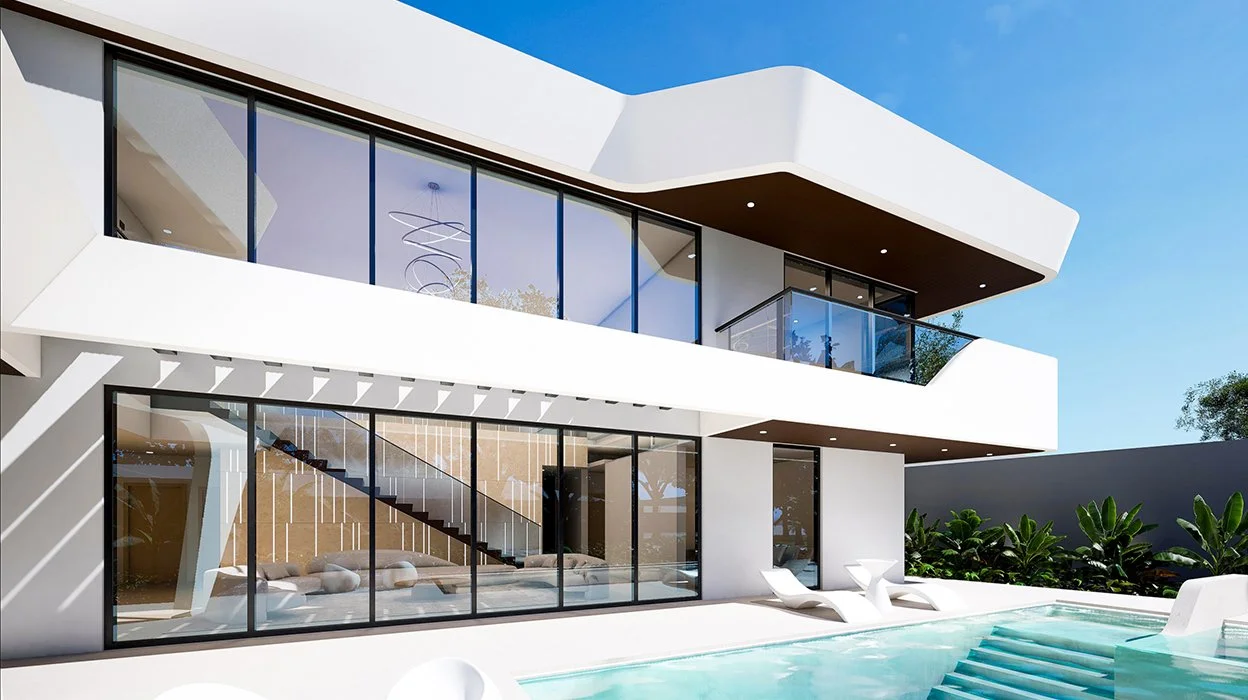
Designing with Meaning and Connection
Organic architecture is a design philosophy that seeks to create spaces in harmony with their surroundings—both natural and human. It goes beyond aesthetics or sustainability to pursue something more essential: meaning. Every line, material, and volume is conceived in response to its environment, purpose, and the people who inhabit it.
Coined by Frank Lloyd Wright, the idea behind organic architecture is not to replicate nature, but to work with it. It’s about designing buildings that feel inevitable in their place—spaces that resonate emotionally, function intelligently, and evolve gracefully over time.
This approach is not limited to homes. From cultural institutions to commercial spaces, organic architecture offers a framework for creating buildings that are not just functional, but deeply human.
Principles of Organic and Meaningful Architecture
1. A Dialogue with Place
Each site holds unique qualities: topography, light, vegetation, and atmosphere. Organic architecture begins with listening to the land—responding to it rather than reshaping it. The result is a building that belongs, that feels anchored and intentional.
2. Honesty of Materials
Materials are selected for their inherent qualities, not masked or manipulated to appear as something else. Stone, wood, concrete, glass—each contributes to the expression of the building and its relationship with its environment.
3. Forms That Emerge from Purpose
Rather than adopting imposed styles, form follows meaning. Spaces unfold naturally, shaped by their function and context. Curves, asymmetry, and movement often arise, but they do so as a consequence of deeper logic—not decoration.
4. Human Experience at the Core
Meaningful architecture centers the people who use it. Light, sound, temperature, flow—every sensory dimension is considered. Spaces are designed to feel intuitive, comfortable, and emotionally resonant.
5. A Unified Vision
Organic design is holistic. Architecture, interior design, landscape, and circulation are not separate disciplines—they are interdependent parts of a coherent whole. The result is a complete experience, not just a composition of elements.
Why Organic Architecture Matters
In an age of rapid development, environmental urgency, and digital overload, organic architecture offers an alternative rooted in connection. It challenges the superficial and calls for intentionality:
Connection to nature, so we remember where we come from.
Connection to place, so buildings reflect their surroundings and communities.
Connection to purpose, so function and meaning align.
Connection to self, so architecture enhances our daily lives, not just our visuals.
It reminds us that buildings are not objects—they’re experiences. And those experiences can be poetic, restorative, and lasting.
Final Thoughts
Organic architecture is ultimately about meaning. In a world that often celebrates speed, repetition, and spectacle, this philosophy invites us to pause and consider: What are we building, and why?
At its best, architecture is not just a shelter or a landmark—it’s a reflection of who we are, where we are, and what we value. Whether it’s a home, museum, school, or office, organic architecture offers the possibility to create places that feel genuine, grounded, and deeply connected.
At Ginard Studio, we believe that meaningful design starts with listening—listening to the site, the client, and the spirit of the project. Organic architecture offers the tools, but meaning is always the goal.