
Designing a Dream Home in Coconut Grove: Architectural Considerations and Zoning Insights
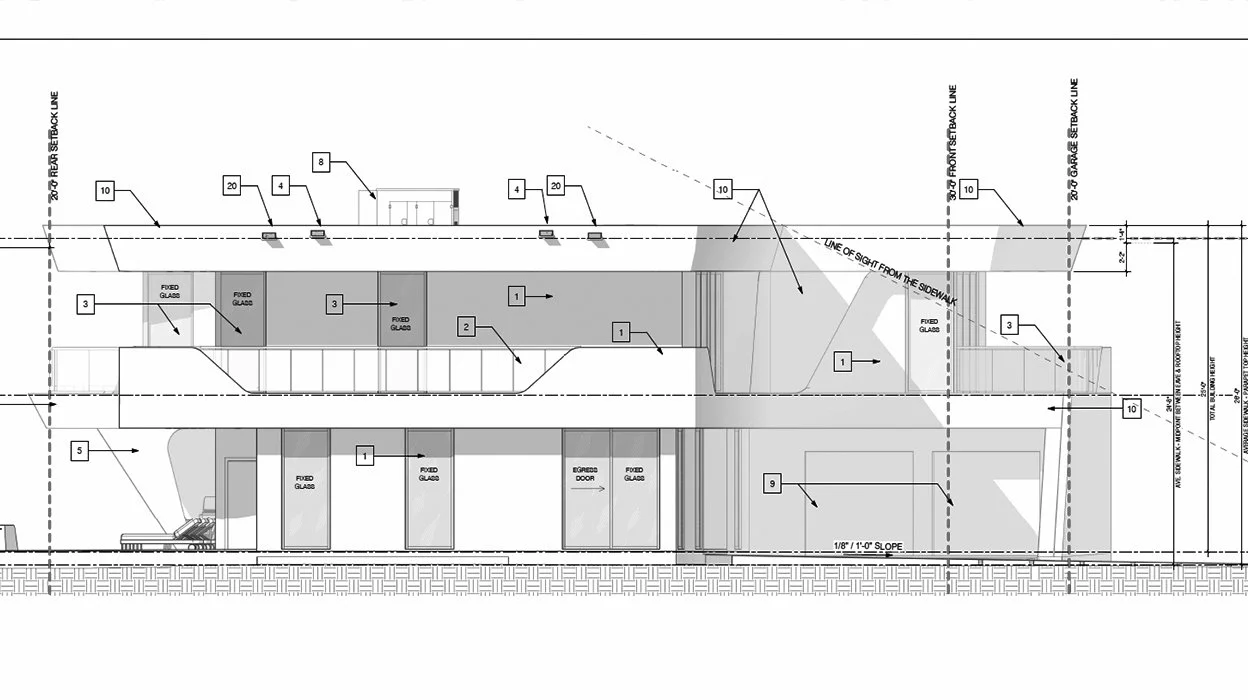
Coconut Grove is one of Miami’s most coveted residential neighborhoods— historic, and filled with architectural variety. Designing a dream home in this area is an exciting opportunity, but it also demands a thoughtful approach to zoning codes, environmental constraints, and design integrity. At Ginard Studio, we guide clients through the process from vision to permitting, balancing aesthetic goals with regulatory realities.
Why Coconut Grove?
Known for its tree-lined streets, waterfront lots, and tropical character, Coconut Grove offers an ideal setting for high-end custom homes. The area attracts families, entrepreneurs, and creatives who value privacy, connection to nature, and walkable amenities. But this unique charm comes with layered planning rules meant to preserve the Grove’s character.
Key Zoning and Planning Considerations
1. Zoning Designation (T3, T4, T5)
Most single-family homes in Coconut Grove fall under the T3-R (Residential) zone in Miami 21—the City of Miami’s form-based zoning code. This zone regulates the building’s height, footprint, placement, and more.
Maximum Height: Typically limited to 2 stories / 25 feet above Base Flood Elevation (BFE).
Lot Coverage: 50%ground floor and 30% second floor lot coverage, encouraging generous landscaped areas.
Setbacks: 30’-0” front and 20’-0” rear, to guarantee open spaces at front and rear side of the lot.
Tip: On larger lots, this can still allow for generous square footage if the layout and massing are carefully planned.
2. Setbacks and Buildable Area
Each lot has specific minimum setbacks—the distances you must leave between the structure and the property lines.
Front Setback: Often 30 feet or aligned with the average of adjacent homes.
Side Setbacks: Usually 5–15 feet ground floor and 25 feet second floor (combined), depending on lot width.
Rear Setback: Typically, 20 feet.
These setbacks shape the "buildable envelope" and are essential to define early in the design process.
3. Tree Preservation & Environmental Constraints
Coconut Grove is heavily wooded and subject to the Miami Tree Protection Ordinance. Preserving mature trees—or mitigating their removal—is a critical step.
Tree Survey Required: A certified arborist must map all trees on the site.
Protected Species: Some native species (e.g., Live Oak, Gumbo Limbo) cannot be removed without extensive justification.
Design Implication: The architecture may need to "weave" around existing trees, turning a constraint into a design feature.
4. Flood Zone and Base Elevation
Much of Coconut Grove lies within Flood Zone AE, requiring compliance with FEMA and local floodplain regulations.
Minimum Finished Floor Elevation: Must meet or exceed Base Flood Elevation (BFE) + 1 foot freeboard (often 9–11 feet above sea level).
Garage Placement: Garages are often placed at grade while main living spaces are elevated.
This elevation strategy affects stairs, entry sequences, landscape transitions, and even the perception of scale.
5. Historic or NCD (Neighborhood Conservation District) Overlay
Parts of Coconut Grove fall within NCD-3, which adds an extra layer of review and restrictions on scale, materiality, and demolition.
Demolition Restrictions: Homes over a certain age may require Historic Preservation Board approval for demolition or significant alteration.
Material Palette: New construction must respect the character of surrounding homes (e.g., natural materials, subdued colors, pitched roofs).
Integrating Zoning with Design Vision
Zoning codes are often perceived as limitations—but for a skilled architectural team, they are starting points for creative problem-solving. At Ginard Studio, we use zoning data to design homes that feel expansive, light-filled, and site-responsive. Whether designing around a heritage tree or leveraging setbacks to create privacy, we turn regulations into opportunities.
Our Process in Coconut Grove
Feasibility Study: We begin with a zoning and code analysis to confirm what’s possible on your lot.
Site Survey & Arborist Report: We coordinate surveys and tree studies early to avoid delays later.
Design Development: Concepts emerge with zoning, sunlight, views, and landscape in mind.
Permitting Strategy: We work closely with the City of Miami and local consultants to streamline approvals, including any variance or NCD reviews.
Construction Oversight: Our team ensures that the approved vision is executed with quality and precision.
Final Thoughts
Designing a custom home in Coconut Grove is more than just architecture—it’s an integration of environment, lifestyle, and regulation. With a strong design team fluent in both aesthetics and zoning strategy, your dream home can be realized without compromise.
Whether you're developing a family retreat or a landmark residence, we invite you to explore what’s possible—creatively and legally—in Coconut Grove.
Need guidance on your Coconut Grove project?
Contact us to schedule a consultation and receive a tailored zoning and design analysis for your property.