
Architecture That Performs on Site: How Real-Time Construction Decisions Protect Your Project
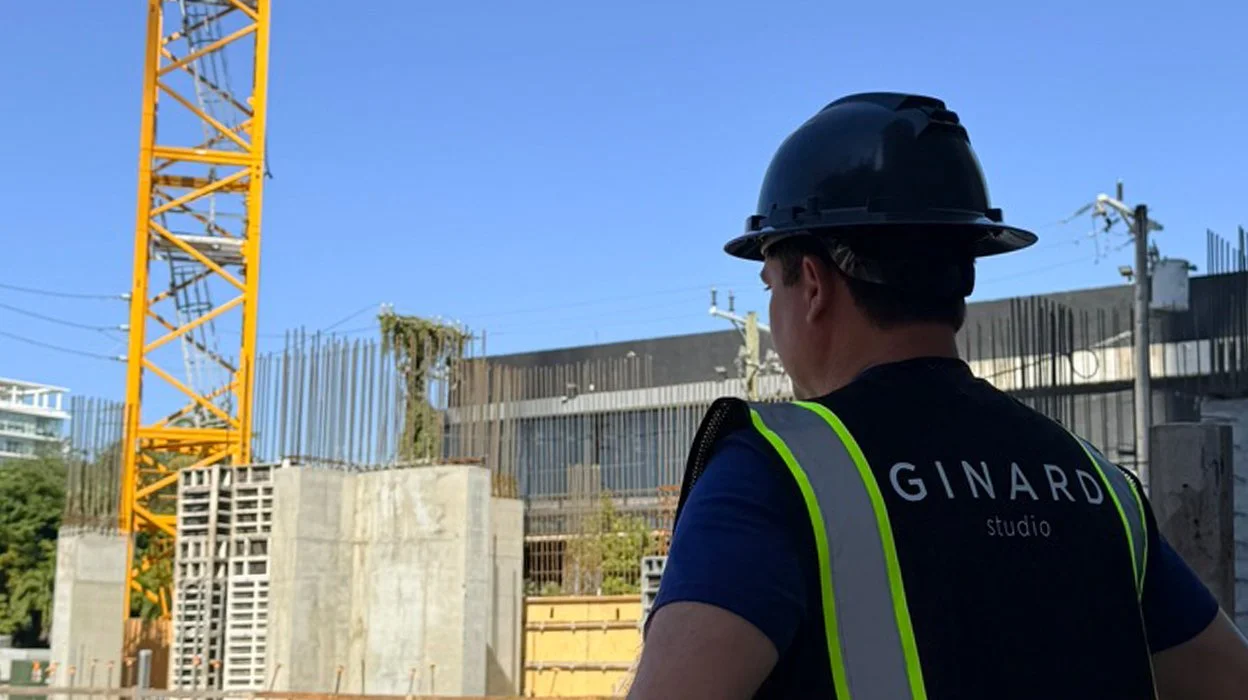
Construction does not happen on paper.
It happens in real time — with crews, materials, tolerances, weather, sequencing, and imperfect conditions.
That is where architecture is truly tested.
Architecture that performs on site is defined by how well it resolves construction challenges while the building is being built — without delays, confusion, or costly rework.
At Ginard Studio, construction administration is not a passive service. It is an active, technical, decision-driven process designed to keep projects moving when reality diverges from drawings.
Why Construction Challenges Happen
Every active construction site generates problems:
Structural conditions that differ from as-built surveys
Conflicts between trades
Tolerance issues at material transitions
Installation sequences that don’t match original assumptions
These are not design failures — they are the natural friction between drawings and reality.
What determines success is how quickly and accurately those moments are resolved.
When architectural responses are slow, vague, or disconnected from construction methods, minor issues escalate into schedule risk, RFIs, and change orders.
Real-Time Detailing as a Construction Tool
When a field condition appears, contractors do not need a memo.
They need a buildable solution.
This is where real-time architectural detailing becomes critical.
At Ginard Studio, we routinely generate on-site sketches and construction clarifications to resolve conditions immediately — aligned with how the building is actually being assembled.
These sketches:
Translate design intent into field-ready solutions
Respect tolerances, sequencing, and material behavior
Allow crews to keep working without interruption
Formal drawings follow, but momentum is protected in the moment that matters.
That is what makes architecture perform on site.
Architecture Integrated With Construction
High-performing construction administration requires more than reviewing submittals.
It requires understanding:
How assemblies are installed
How trades interact
Where tolerances accumulate
Where risk concentrates
By staying embedded in the construction process — through continuous coordination with general contractors, engineers, and key trades — architecture becomes a stabilizing force rather than a bottleneck.
Decisions are made with full awareness of schedule, labor, and physical reality.
Performance Is Measured in What Keeps Moving
You do not measure on-site performance by how elegant the drawings were.
You measure it by:
Work that continues without stoppage
Crews that have clear direction
Problems that get solved before they become delays
Architecture that performs on site protects:
Schedule
Cost control
Buildability
Design integrity
That is the difference between architecture that looks good on paper and architecture that actually delivers in the field.