
Our Process
A clear, disciplined approach—from early feasibility to construction.

We approach architecture as a structured process, not a sequence of images.
Each phase builds on the previous one, reducing uncertainty, improving coordination, and supporting predictable execution.
01 — Feasibility & Early Studies
Where every successful project begins.
Every successful project begins with clarity.
We start by evaluating zoning regulations, site constraints, allowable density, and development potential specific to Miami and South Florida jurisdictions.
Through feasibility studies, test fits, and early massing analysis, we help developers understand what can realistically be built before major decisions are made.
This early work reduces risk, aligns expectations, and sets a clear foundation for design, permitting, and construction.
02 — Schematic Design
Design starts with how the building works.
Once feasibility is established, we focus on how the building will function.
We organize layouts, circulation, unit mixes, and service areas to support efficient construction, market demand, and long-term performance.
Planning decisions are made in close coordination with structural logic, parking requirements, and code constraints common to Miami multifamily, hospitality, and mixed-use projects.
The goal is a clear, buildable framework that supports both design intent and development efficiency.
03 - Design Development
Design beyond renderings.
Design development is where concepts are translated into buildable architecture.
During this phase, we refine layouts, structural logic, building systems, and technical details to ensure the design performs efficiently in construction, operation, and long-term use.
Our team develops coordinated architectural drawings in Revit, aligning architecture with structural, mechanical, electrical, and plumbing systems early in the process. This level of coordination reduces conflicts, improves cost predictability, and supports smoother permitting in Miami and South Florida jurisdictions.
Design, for us, is not limited to how a building looks. It includes how spaces function, how systems integrate, how materials perform, and how the building responds to its site, code requirements, and surrounding environment. Technical detailing is treated as a core part of the design process, not a separate step.
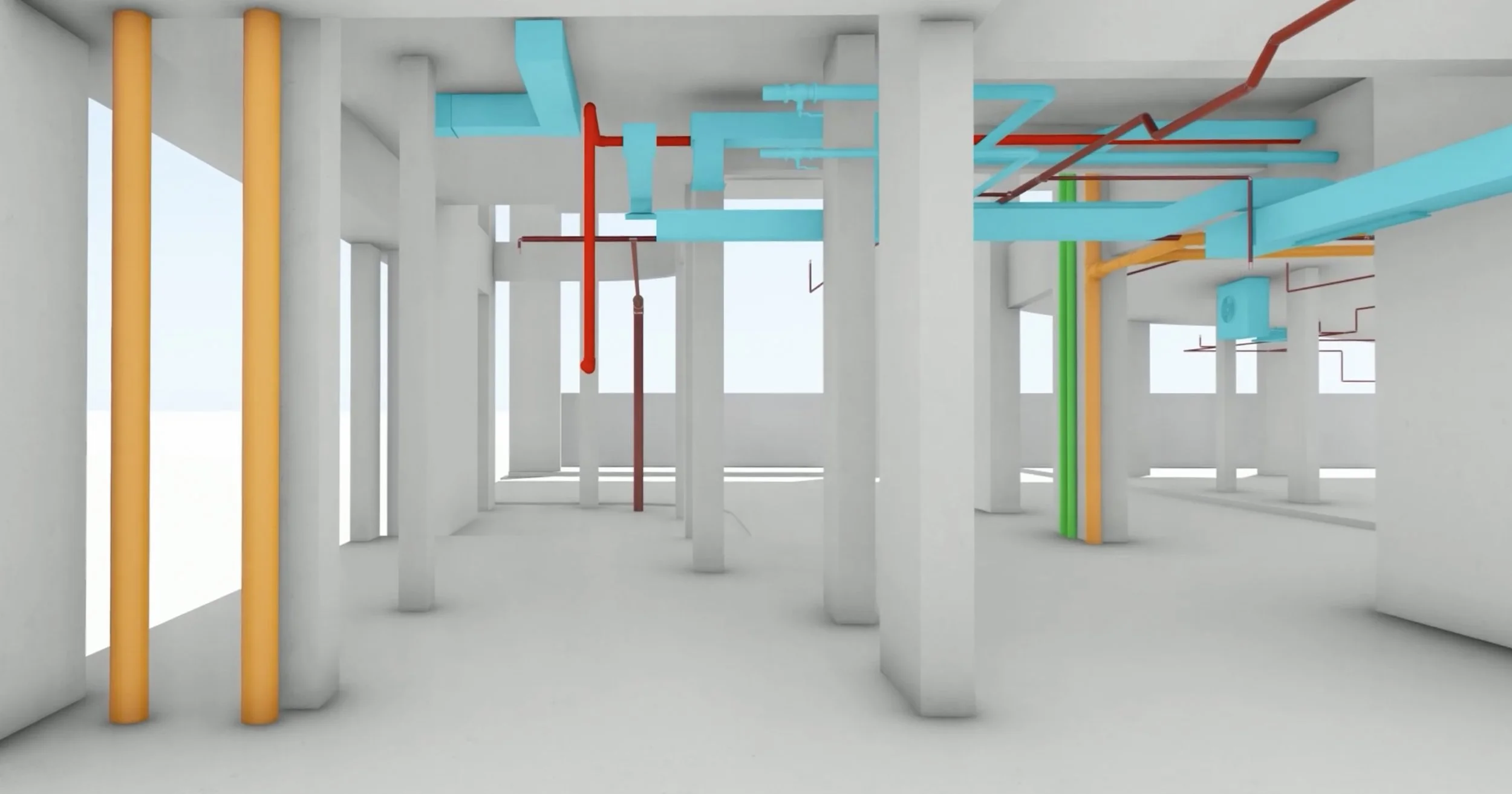
Technical Coordination & BIM Execution
Design decisions only have value if they are coordinated across all systems.
At this stage, we lead detailed BIM coordination in Revit, aligning architectural, structural, and MEP systems into a single, coordinated model. This allows conflicts to be identified early—before they become RFIs, change orders, or field delays.
This means fewer surprises during construction, clearer information for pricing, and better predictability across consultants and trades.
04 - Construction Documents
This is where design becomes buildable.
We produce detailed, coordinated construction documents developed in Revit, ensuring architectural, structural, and MEP systems align clearly before construction begins. Our focus is on clarity, accuracy, and real-world execution—reducing RFIs, change orders, and field conflicts.
For developers and contractors, this means drawings that support reliable pricing, efficient construction, and predictable outcomes.
05 — Permitting & Approvals
Prepared with real review conditions in mind.
We manage the permitting process by coordinating submissions, responding to comments, and addressing zoning, life-safety, and technical requirements early. Experience with Miami and South Florida jurisdictions allows us to anticipate review issues and reduce resubmittals.
The result is a smoother approval process and fewer surprises once construction is underway.
06. Construction Administration
Architecture does not end with design.
We remain actively involved during construction, reviewing submittals, responding to RFIs, attending site meetings, and coordinating with contractors and consultants. This ensures that the intent of the documents is carried through while addressing real site conditions.
Developers and general contractors value this level of involvement because it leads to faster decisions, clearer direction, and fewer disruptions in the field.
07 - Project Delivery & Closeout
Focused on completion, not just construction.
As projects approach completion, we support punch lists, final inspections, and closeout documentation to ensure the building performs as intended. Our role continues through the final stages to help deliver a project that meets design, operational, and ownership expectations.
For our clients, this means a smoother transition from construction to occupancy.
Innovation without shortcuts
We use technology to build better projects, not just better images.
Our process is centered on Revit-based BIM, where architecture, structure, and MEP systems are coordinated early to support cost control, constructibility, and reliable schedules.
This allows us to identify conflicts before construction, reduce RFIs, and produce documents that contractors can actually build from.
We also use AI and advanced digital tools selectively — to accelerate studies, test options, and improve decision-making — never as a replacement for technical knowledge or construction experience.
Technology, in our practice, is a tool to support clarity, coordination, and performance, not a shortcut around documentation or responsibility.